

Drinkware
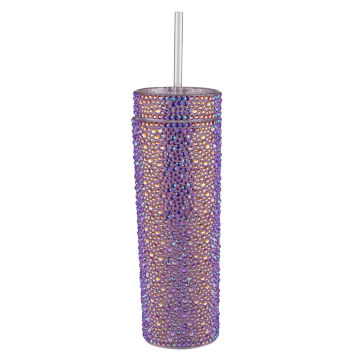
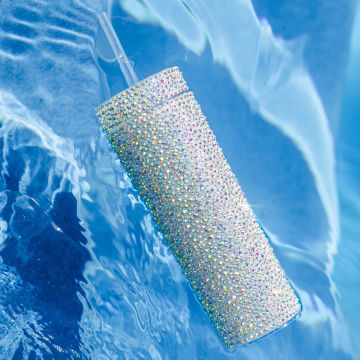
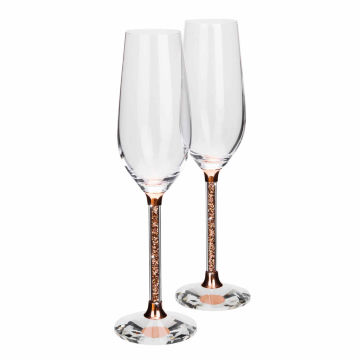
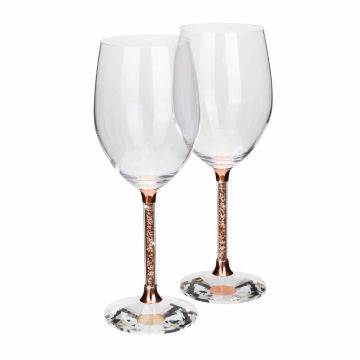
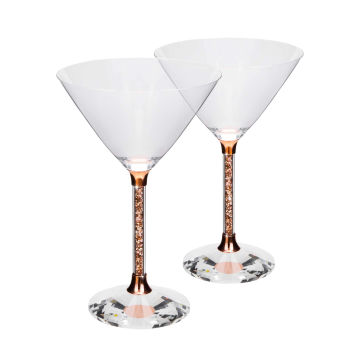
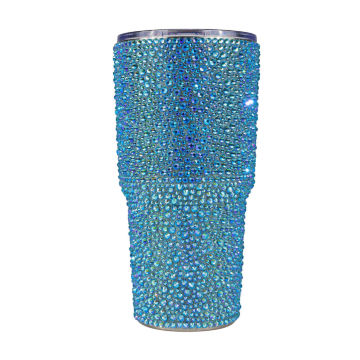
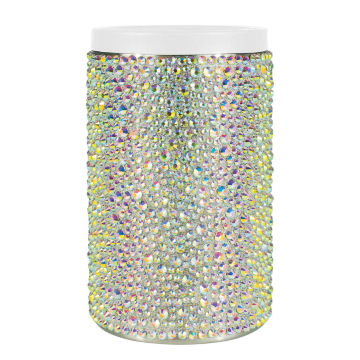
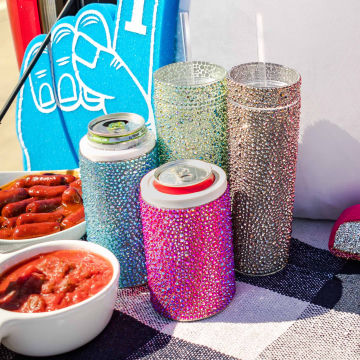
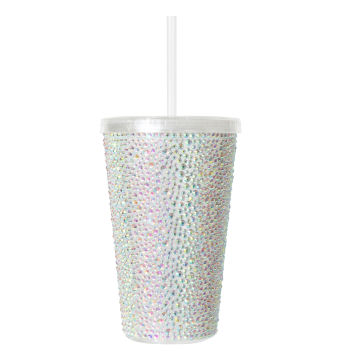
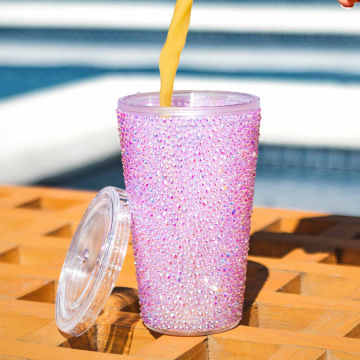
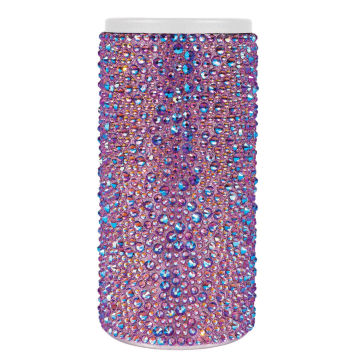
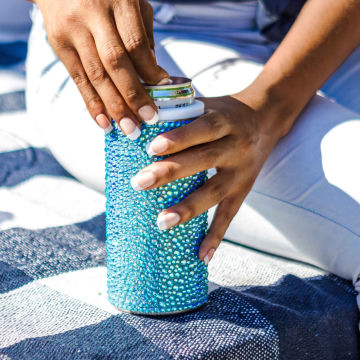
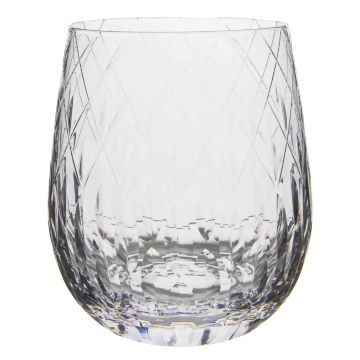
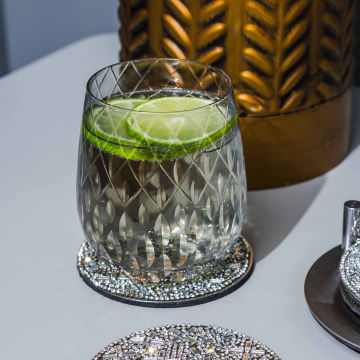
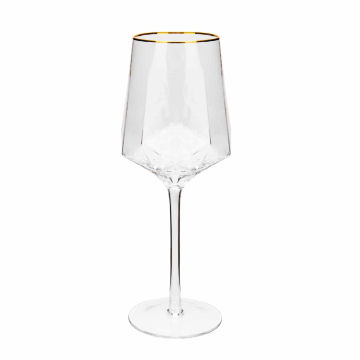
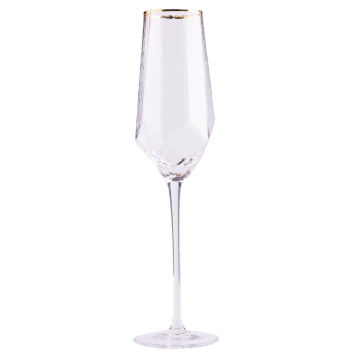
Rhinestoned and cut-crystal drinkware — Marquise Cut rocks glasses, Prism wine and drinking glasses, Vetrina stem glasses, Strass tumblers and can insulator, and the Appian cocktail shaker.
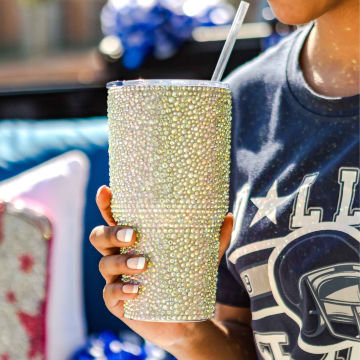
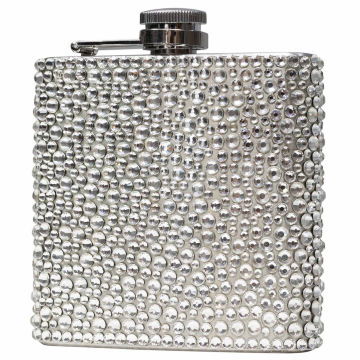
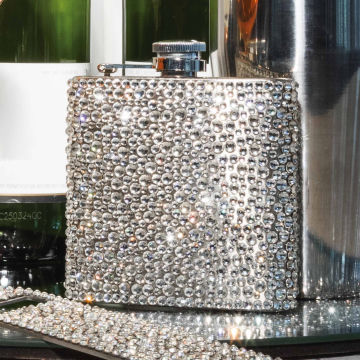
Two different effects sit in this range. The cut glassware refracts through the glass itself, so it wants light behind it and a clear pour in it. The stoned tumblers, insulator and flask carry the sparkle on an opaque outside and travel, which is the practical half of the range: the same finish on something you can take out of the house.
Buy the sets complete if the table is meant to read as one, and store stemware where the stones are not knocking against other pieces. The pillows and accents use the same stone treatment if you are dressing the room around the table.





Frequently Asked Questions
It depends on the piece. Jackets, shirts, and pillow covers use heat-set rhinestones, pressed into the fabric so the bond survives regular wear and laundering. Sneakers, heels, and drinkware are hand-placed with adhesive, because those surfaces are curved, layered, or heat-sensitive and cannot go under a press.
Both methods are permanent. They differ in what the surface will tolerate, not in how well they hold.
Not under normal wear. Heat-set stones on apparel are bonded into the fabric rather than sitting on top of it, and hand-placed stones on footwear and drinkware are set with an adhesive rated for flexing and handling.
What does cause loss is abrasion and heat: a rhinestoned sneaker scuffed against a curb, a tumbler run through a dishwasher, or a jacket dried on high. Those are avoidable, and the care answers below cover each one.
Turn it inside out, wash cold on the gentle cycle, and hang dry. Do not use bleach or fabric softener — softener leaves a residue that creeps under the stone edge and loosens it over time.
If you must use a dryer, use the lowest heat setting and pull the piece while it is still slightly damp. Heat is what breaks a heat-set bond; the same energy that made it can undo it.
Never iron directly over the stones. If the garment needs pressing, turn it inside out and press the reverse.
No. Hand wash only, in warm water with a soft cloth, and dry immediately.
A dishwasher combines everything that damages a set stone: sustained high heat, high-pressure spray, and harsh detergent. Our tumblers are double-walled and the crystal application is secure, but no adhesive is rated for that cycle. Hand washing takes a minute and the finish stays intact for years.
They are made to be worn, but they reward a little thought about where. Hand-placed stones sit slightly proud of the surface, so the wear points are the toe box and the outer edge — the same places that scuff on any shoe.
For daily wear, avoid wet pavement and abrasive surfaces, wipe with a dry soft cloth after each wear, and store them in the box rather than loose in a closet where they knock against other shoes. For performance and event wear, that care routine will keep them looking new indefinitely.
Yes. A single missing stone is a five-minute fix with a flatback rhinestone of matching size and a dot of gem adhesive such as E6000. Clean the empty setting with rubbing alcohol, apply adhesive to the stone rather than the garment, place with tweezers, and leave it 24 hours to cure.
Match the size before you buy: most of our apparel uses SS16 to SS20 stones, and footwear varies by design.